
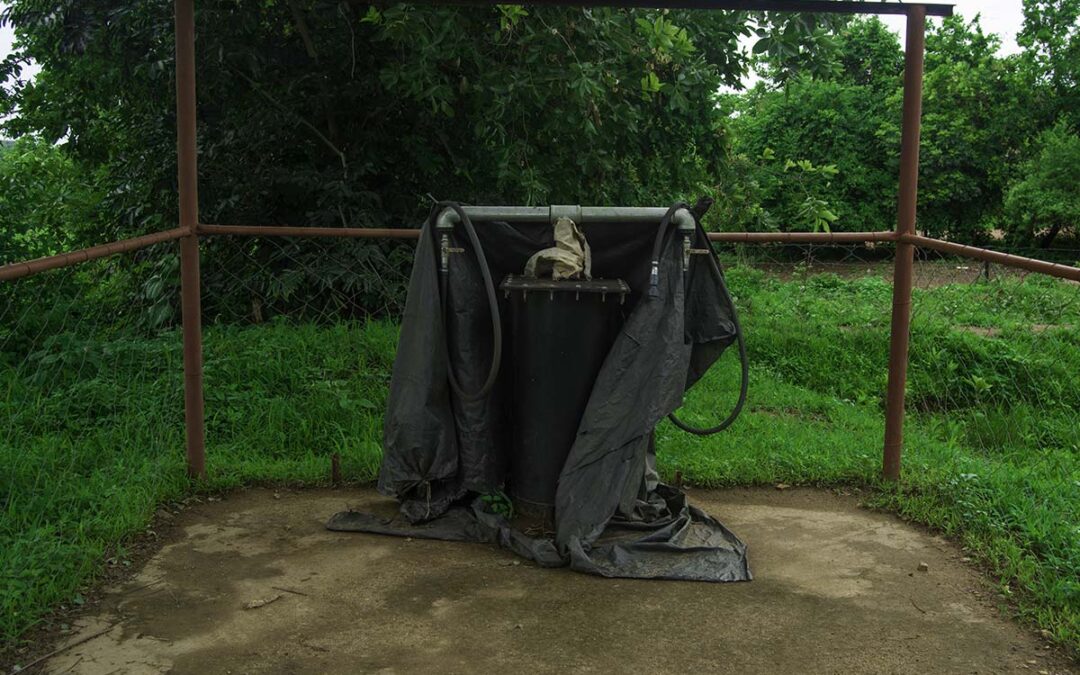
In Hurungwe District, Ward 7, Bravo Village, Tag a Life International has been implementing an integrated clean energy and sustainable livelihoods project originally supported by the United Nations Development Programme under the GEF Small Grants Programme United Nations Development Programme.
That foundational project introduced a biogas system, a four compartment pigsty, and a community orchard to address deforestation, energy poverty, and women’s economic vulnerability.
The G20 Global Land Initiative grant came at a critical moment, not to duplicate infrastructure, but to strengthen sustainability, restoration outcomes, and accountability mechanisms.
What the G20 Global Land Initiative Funded
The G20 GLI support focused on four strategic components:
1. Piggery Maintenance
The grant supported feed and veterinary care to stabilize pig production during drought and economic instability. Maintaining healthy livestock was essential because pig waste feeds the biogas system and piggery sales sustain women’s incomes.
2. Pigsty Extension
Due to reproduction, pig numbers increased beyond the capacity of the original four compartments. The G20 GLI funding enabled the extension of the pigsty infrastructure to accommodate the growing population, protect animal health, and improve hygiene standards. This protected the productivity and long term viability of the project.
3. Monitoring and Evaluation
The grant strengthened monitoring systems, restoration tracking, and performance measurement. This ensured that land management improvements and livelihood impacts were documented with verifiable data, aligned with global restoration reporting standards.
4. Documentation and Knowledge Management
Professional documentation captured before and after restoration evidence, community participation, and lessons learned. This contributes to transparency, learning, and replication within the global restoration movement.
Why This Support Mattered
The G20 GLI intervention came during:
* El Niño induced droughts
* Rising feed and input costs
* Reduced household resilience
Without maintenance support, livestock productivity would have declined, directly affecting:
* Women’s livelihoods
* Biogas system inputs
* Community confidence in the restoration model
The grant therefore protected previous environmental investments and prevented regression.
Women Led Climate Resilience
The project directly benefits 39 women who serve as primary custodians of the piggery and restoration site. The initiative strengthens:
* Women’s participation in natural resource governance
* Household income diversification
* Climate adaptation capacity
This aligns strongly with the G20 GLI mandate to build resilient communities while restoring and sustainably managing land.
Restoration Impact
While the broader initiative covers a larger landscape under improved management, the G20 GLI grant directly contributed to sustaining 5 hectares of land under restoration linked to orchard management and sustainable land use systems.
This distinction ensures transparency between the original UNDP supported infrastructure and the complementary G20 GLI strengthening support.
A Layered Investment Model
This project demonstrates how global partnerships can build on one another:
* UNDP established foundational infrastructure
* G20 Global Land Initiative strengthened sustainability, maintenance, and accountability
* TaLI continues mobilizing resources to scale restoration and resilience
The result is not just land restoration. It is institutional strengthening, women’s economic empowerment, and community owned climate resilience.