
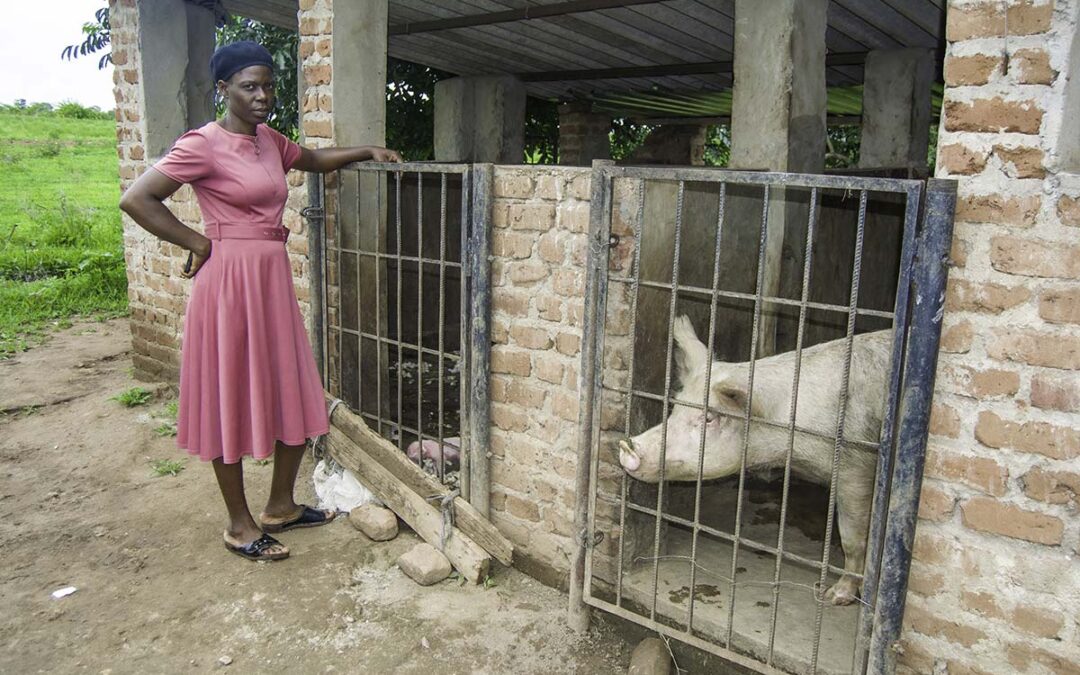
If the biogas system represents long-term mitigation, the piggery became immediate adaptation.
Through the initial intervention, a four-compartment pigsty was constructed and four gilts procured. Within months, three gave birth to 22 piglets.
Then drought intensified.
Crops failed. Water shortages affected both households and livestock. But the piggery became a financial buffer. Women generated income to pay school fees, purchase food, and reinvest in livestock feed and vaccines.
Recognising the growing pig population and the need to sustain livelihoods, G20 Global Land Initiative support contributed to the extension of pigsties, enabling the women to manage the increasing numbers and strengthen economic resilience.
This was not just infrastructure expansion.
It was livelihood protection.
Since 2010, TaLI has understood that rights without income are fragile. The organisation has consistently integrated economic empowerment into its programming — through Leadership and Economic Mentorship Hubs, income savings schemes, and climate-linked livelihoods.
In Bravo Village, piggery production became more than livestock management.
It became dignity in the face of drought.