
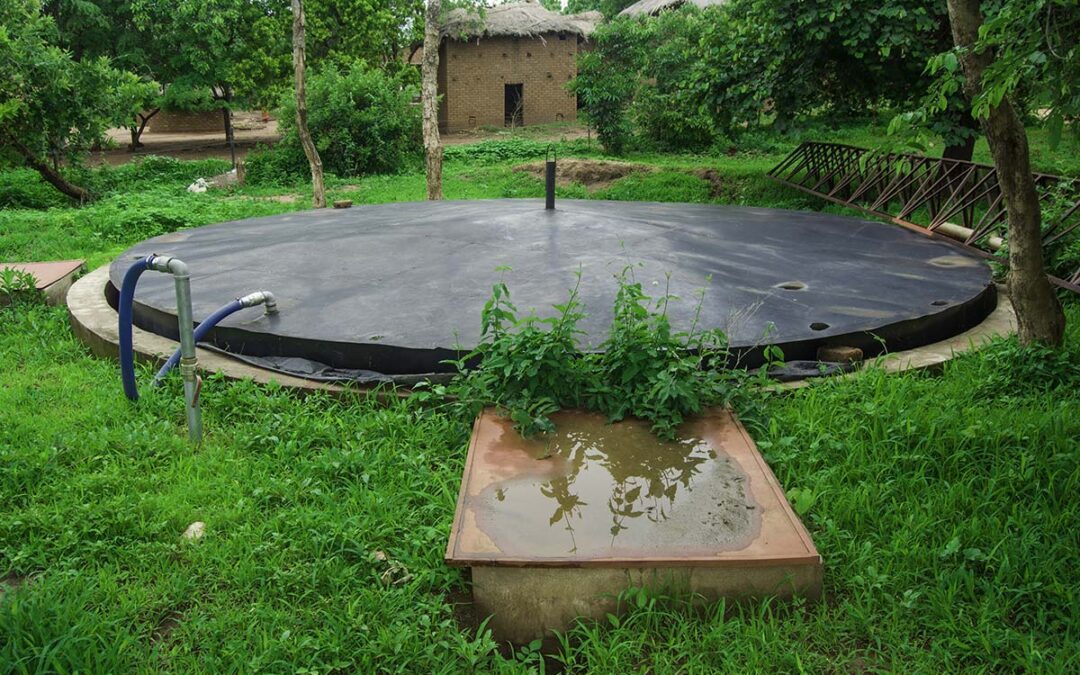
The project included the construction of a community-scale biogas plant, designed to reduce firewood consumption and lower greenhouse gas emissions. Technical systems were installed. Women were trained in renewable energy, system operation, and maintenance. Governance structures were formed.
And then the digester did not ferment.
Slurry quality challenges meant the system could not activate as expected. Attempts were made. Technical advice was sought. Adjustments were tried. But the system is not yet fully functional.
This is where donor language speaks of “adaptive management” and “innovation in complex contexts.”
On the ground, it meant disappointment.
But it also meant resilience.
The infrastructure remains in place. The women remain trained. The vision remains intact.
TaLI continues mobilising additional support to make the biogas system fully functional, including leveraging G20 Global Land Initiative contributions to strengthen the restoration agenda and sustain the renewable energy objective.
The technology is not yet delivering gas.
But it has already delivered knowledge, confidence, and environmental consciousness.